

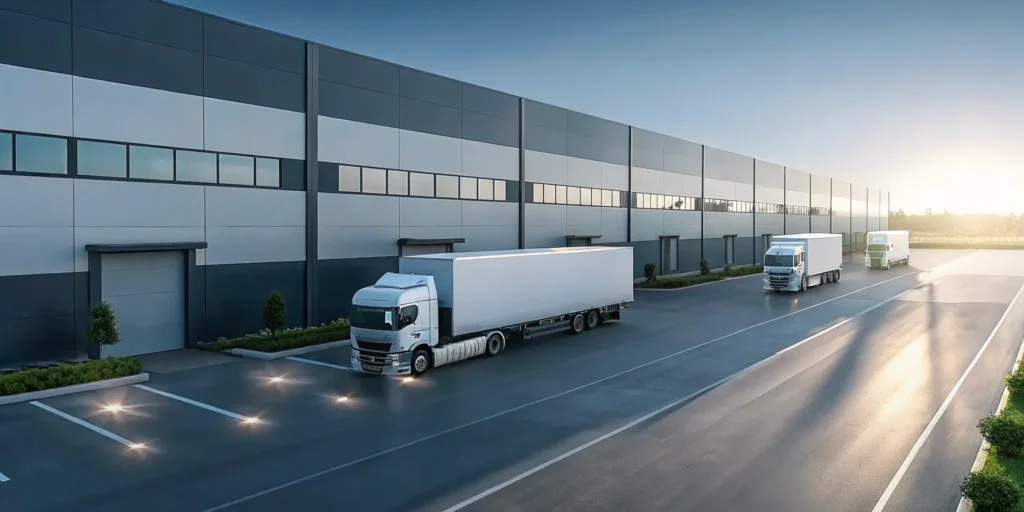
You’ve probably noticed more delivery vans in your neighborhood than ever before. Behind every one of those packages is a complex logistics network, and at its heart is a light industrial building. These facilities are the unsung heroes of modern commerce, serving as the critical link between products and consumers. Unlike speculative ventures, their value is tied to the real, everyday needs of businesses and shoppers. As an investor, this provides a layer of stability that is hard to find elsewhere. Understanding this asset class means seeing the opportunity in the infrastructure that supports our daily lives. Below, we’ll explore what makes these properties so essential and identify the best markets for light industrial real estate poised for long-term growth.
Key Takeaways
- Light industrial is essential infrastructure: Its value comes from supporting fundamental business needs, from e-commerce fulfillment to local services. This direct link to everyday economic activity makes it a tangible and understandable asset class.
- Location and functionality are equally important: A great investment requires a property with practical features like flexible layouts and good truck access, located within a market that has strong growth signals like low vacancy and a growing population.
- Active management drives performance: The best returns come from improving a property’s operational efficiency with technology and sustainability, while also carefully managing risks like market saturation and rising construction costs.
What Is Light Industrial Real Estate?
When you think of industrial real estate, you might picture massive factories on the outskirts of town. But there’s another, more common type of industrial property that plays a vital role in our daily lives: light industrial. These are the properties used for warehousing, product assembly, and distribution. They are typically smaller, cleaner, and located much closer to urban and suburban areas.
Think about the journey a product takes to get to your doorstep. A light industrial facility is often the final stop before a package arrives. Because these buildings are essential for getting goods to consumers and businesses quickly, they represent a tangible and understandable asset class. They are the backbone of modern logistics, supporting everything from e-commerce fulfillment to local service businesses.
How Light Industrial Differs from Heavy Industrial
The main difference between light and heavy industrial comes down to intensity. Heavy industrial facilities are built for large-scale, often disruptive manufacturing processes involving heavy machinery, raw materials, and specialized equipment. Think steel mills, chemical plants, or auto manufacturing plants. These operations require robust infrastructure and are usually zoned far away from residential areas.
Light industrial, on the other hand, involves operations that are much less intensive. The focus is on storage, assembly, and distribution rather than raw production. As logistics experts note, most modern industrial buildings are designed to keep goods moving, not just sitting in storage. This makes them cleaner, quieter, and better neighbors, allowing them to be located closer to the customers they serve.
Common Uses: From Last-Mile Delivery to Flex Space
The versatility of light industrial properties is a major reason for their growing demand. One of their most critical roles is serving as last-mile delivery hubs. The continued growth of online shopping has created a massive need for facilities that can quickly sort and dispatch packages to local homes and businesses.
Beyond logistics, these properties are often used as flex space, a core part of our investment strategy at QC Capital. Flex spaces are highly adaptable buildings that can combine a small office or showroom with warehouse and distribution functions under one roof. This makes them perfect for a wide range of tenants, from a local plumbing company that needs to store equipment and run its office to an e-commerce brand that handles its own fulfillment. This adaptability helps keep occupancy high and provides consistent income.
What’s Fueling Demand for Light Industrial Space?
The steady demand for light industrial real estate isn’t an accident. It’s driven by fundamental shifts in how we shop, how businesses operate, and where companies want to be located. For investors, understanding these powerful undercurrents is key to seeing why this asset class has become so essential. These are not fleeting trends; they are long-term changes in consumer and business behavior that are reshaping the commercial landscape and creating durable opportunities.
The E-Commerce Effect on Last-Mile Distribution
The rapid growth of online shopping has completely changed consumer expectations. We don’t just want to buy things online; we want them delivered quickly, often within a day or two. This has created a massive need for last-mile distribution centers, which are smaller warehouses located in or near urban areas. These facilities are the final stop for a package before it reaches a customer’s doorstep. As e-commerce sales continue to climb, so does the demand for light industrial spaces that can help businesses store products and fulfill orders efficiently.
A Renewed Focus on Domestic Supply Chains
For years, the global supply chain was all about finding the cheapest manufacturing option, no matter how far away. Recent disruptions have shown the risks of that model. Now, companies are actively working to make their supply chains more resilient by bringing operations closer to home. This “reshoring” or “nearshoring” trend means businesses need more domestic facilities for light manufacturing, assembly, and warehousing. This shift supports QC Capital’s investment strategy, which focuses on essential, tangible assets that power the U.S. economy and reduce reliance on fragile international supply lines.
The Shift Toward Flexible, Smaller Industrial Spaces
When you think of industrial real estate, you might picture a massive, single-tenant warehouse. But today, some of the highest demand is for smaller, more flexible buildings. These “flex spaces” can be adapted for a wide range of tenants, from a local plumbing company that needs to store vehicles and equipment to a growing online brand that needs office space and a small warehouse under one roof. This versatility makes flex space a particularly attractive part of the market because it serves a diverse tenant base and can adapt as business needs change, creating a more stable investment.
Why Proximity to Consumers Matters More Than Ever
In logistics, location is everything. The closer a business is to its customers, the faster and cheaper it can deliver its products or services. This is why we’re seeing light industrial properties thrive in locations with easy access to major highways, airports, and dense population centers. These facilities are critical pieces of the industrial real estate puzzle. For businesses competing on speed and convenience, being located inside or very near a major city isn’t a luxury; it’s a competitive necessity that directly drives the value of well-placed industrial assets.
What Metrics Actually Matter When Evaluating a Market?
When you’re evaluating a potential market for a light industrial investment, it’s easy to get lost in data. The key is to focus on the metrics that directly signal demand, stability, and growth potential. A strong market isn’t just about a single flashy number; it’s about a combination of factors that tell a compelling story of supply and demand. By looking at a few core indicators, you can cut through the noise and identify areas with a durable competitive advantage. Our investment strategy is built on this kind of disciplined, data-driven analysis, focusing on what truly drives value. Let’s break down the numbers that matter most.
Vacancy and Absorption Rates
Think of vacancy and absorption rates as the pulse of the market. The vacancy rate tells you how much industrial space is currently empty, while the absorption rate measures how quickly that empty space is leased up over a period. A low vacancy rate is a clear sign of high demand. When combined with a high absorption rate, it indicates that new supply is being quickly occupied by tenants. This dynamic suggests a landlord-friendly market where there’s little downtime between leases, leading to more consistent cash flow and giving property owners leverage to maintain or increase rents.
Rent Growth and Cap Rate Trends
Rent growth is a direct reflection of demand exceeding supply. When businesses are competing for limited space, rents naturally rise. Consistent, steady rent growth is one of the strongest indicators of a healthy market. Alongside rent, you’ll want to look at capitalization (cap) rates. A cap rate is a property’s annual net operating income divided by its market value, giving you a snapshot of its potential return. While a lower cap rate often signals a more mature, stable market, comparing cap rate trends across different cities helps you understand relative value and identify markets where there may still be room for appreciation.
Population Growth, Job Growth, and Economic Diversity
Light industrial properties thrive in areas where people and businesses are moving in. Strong population growth creates a larger consumer base, fueling demand for e-commerce and last-mile delivery services. At the same time, robust job growth means more companies are expanding and need space for their operations, from warehousing to light manufacturing. It’s also important to look for economic diversity. A market that relies on a single industry is vulnerable to downturns. A diverse mix of businesses creates a more resilient and stable tenant base for industrial properties over the long term.
Transportation Infrastructure and Logistics Access
For most light industrial tenants, location is everything. Proximity to major transportation arteries is not just a convenience; it’s essential for business. When evaluating a market, look at its access to highways, airports, seaports, and rail lines. This infrastructure is the backbone of the modern supply chain, enabling tenants to receive goods and fulfill orders efficiently. As one Prologis report notes, modern warehouses are often built near these critical hubs to support rapid delivery. A property with superior logistics access will always be in higher demand, making it a more secure and valuable asset.
How Technology Is Reshaping Light Industrial Real Estate
When you picture an industrial building, you might imagine a simple, sprawling warehouse. But today, technology is fundamentally changing these assets, turning them from passive storage facilities into intelligent, high-performing hubs of commerce. For investors, this evolution is creating powerful new ways to drive value that go far beyond a standard lease agreement. It’s no longer enough to just own the building; the real opportunity lies in optimizing its operations through technology.
This shift is critical because it directly impacts a property’s bottom line. Modern light industrial spaces are now equipped with systems that make them more efficient, resilient, and attractive to top-tier tenants who see technology as essential to their own success. These advancements generally fall into three key areas: automation that streamlines workflows, data analytics that inform smarter management, and sustainable features that cut costs while meeting corporate responsibility goals. Investing in properties that integrate these elements isn’t just about keeping up with trends; it’s about securing a competitive advantage. A tech-enabled building can command higher rents, retain tenants longer, and operate with lower expenses, all of which contribute to stronger cash flow and greater appreciation. This is why our investment strategy at QC Capital focuses on acquiring assets where we can implement these operational improvements and create tangible, lasting value.
Automation, Robotics, and Smart Building Integration
Automation is making light industrial facilities more productive than ever. For tenants in logistics and e-commerce, this means using robotics to sort packages and manage inventory, which speeds up fulfillment and reduces labor costs. For small-scale manufacturers, it could mean automated assembly lines that operate with precision.
Beyond robotics, smart building technologies are becoming standard. These systems manage everything from lighting and climate control to security and access. For an owner, this translates directly to lower utility bills and reduced maintenance needs. For a tenant, it creates a safer and more efficient work environment. Properties equipped with this technology are not just more cost-effective to run; they are also far more attractive to the growing number of businesses that rely on technology to compete.
Using Data to Improve Operational Efficiency
Data is one of the most powerful tools for optimizing an industrial asset. Modern facilities are outfitted with sensors and software that collect information on everything from energy usage to the flow of goods through a loading dock. This information allows operators to move from a reactive to a proactive management style.
For example, instead of waiting for a critical piece of HVAC equipment to fail, data-driven predictive maintenance can signal when a component needs service, preventing costly downtime for tenants. This data can also reveal bottlenecks in a facility’s layout or operations, providing clear opportunities for improvements that enhance tenant productivity. By turning raw data into actionable insights, operators can fine-tune a property’s performance, reduce unexpected expenses, and create a more valuable, cash-flowing asset.
The Rise of Sustainable and Green Building Standards
Sustainability is no longer a niche interest; it’s a core business consideration. Tenants, especially larger corporations, are increasingly seeking properties that align with their environmental, social, and governance (ESG) goals. Light industrial buildings that incorporate green features are in high demand, and this trend is only growing.
These features include everything from solar panels and high-efficiency insulation to LED lighting and water-saving fixtures. The benefits are twofold. First, they significantly lower operating costs by reducing energy and water consumption, which directly improves the property’s net operating income. Second, they serve as a powerful marketing tool to attract and retain premium tenants. Buildings that achieve green building certifications like LEED often command higher rents and maintain lower vacancy rates, making them more resilient and profitable long-term investments.
Top Markets to Watch for Light Industrial Investment
Location is the bedrock of any successful real estate investment, and this is especially true for light industrial properties. While the sector is strong nationwide, certain markets stand out due to a powerful combination of population growth, superior logistics infrastructure, and business-friendly environments. Identifying these high-potential areas is a core part of a disciplined investment strategy that prioritizes assets with durable, long-term demand.
The following markets are not just thriving today; they are positioned for sustained performance because of their unique economic drivers. From the logistics crossroads of the Midwest to the bustling trade hubs of the Sun Belt, each location offers a compelling story for investors. We’ve analyzed key metrics like vacancy rates, rent growth, and construction pipelines to pinpoint where the most promising opportunities lie. This list serves as a guide to the markets where demand is outpacing supply and where the fundamentals point toward consistent cash flow and value appreciation.
Indianapolis, IN
Indianapolis has solidified its reputation as a distribution powerhouse, largely thanks to its central location, which earns it the nickname “Crossroads of America.” The market is showing excellent health with strong leasing activity and a low vacancy rate. What makes it particularly compelling for investors right now is that the pace of new construction is slowing down. This helps protect existing assets from becoming oversupplied, creating a stable environment where property owners can benefit from steady demand and predictable rent growth. It’s a prime target for anyone looking to invest in logistics and warehouse facilities.
Dallas-Fort Worth, TX
The Dallas-Fort Worth (DFW) metroplex is a top-tier industrial market for several clear reasons. Its central U.S. location and vast highway network make it an essential logistics hub, while its booming population fuels constant consumer demand for goods and services. This drives the need for everything from large distribution centers to smaller flex industrial spaces. With a healthy vacancy rate and a construction pipeline that is becoming more balanced, the market is absorbing new properties at a steady rate. This indicates sustained demand and a positive outlook for investors.
Houston, TX
Houston’s industrial market is massive and deeply connected to global commerce, anchored by the activity at the Port of Houston. This constant flow of goods generates relentless demand for warehouse and distribution space. A key trend here is the rise of build-to-suit projects, where new facilities are constructed for a specific, pre-committed tenant, which significantly reduces speculative risk. For investors looking to acquire existing assets, the city’s diverse business landscape and role in international trade provide a resilient foundation for long-term performance.
Orlando, FL
Once known primarily for tourism, Orlando has rapidly evolved into a dynamic industrial market. The city’s impressive economic expansion and significant population growth are fueling steady demand for light industrial and warehouse properties. A low 7.8% vacancy rate confirms that businesses are actively leasing space to serve the growing region. As more people and companies relocate to Central Florida, the need for facilities to store, process, and distribute goods will only intensify, making Orlando a compelling market for investors looking to capitalize on strong demographic tailwinds.
Philadelphia, PA
As a mature and essential East Coast shipping hub, Philadelphia’s industrial market is currently presenting a unique opportunity. A slightly higher vacancy rate in the mid-8% range means both tenants and investors have more properties to choose from. With stable rents and some landlords offering incentives, it can be an ideal time to acquire quality assets at a fair value before the market tightens. Philadelphia’s strategic location, offering access to one of the country’s densest population centers, ensures its long-term importance for logistics and distribution.
Miami, FL
Miami operates as a high-energy gateway for international trade, with an industrial market heavily influenced by logistics and shipping between North and South America. Demand for space is consistently strong, and new construction is focused on modern warehouses built to handle high volumes of goods. This has created a competitive, landlord-favorable environment with tight supply. For investors, Miami offers a direct connection to global economic currents, making it a strategic addition to an industrial portfolio focused on essential trade routes.
Chicago, IL
Chicago is one of the nation’s most critical industrial centers, boasting an unparalleled transportation network of rail, air, and road systems. The market is seeing robust leasing activity and impressive rent growth, which climbed 7.1% in just one year according to a recent Crexi report. At the same time, a slowdown in new construction is helping balance supply and demand in favor of property owners. This environment of rising rents and high tenant demand makes Chicago a fundamentally sound market for industrial investment, offering both stability and growth.
Denver, CO
Denver’s industrial market is demonstrating resilient and steady growth. As a key distribution point for the Mountain West, its location along major shipping corridors is a significant advantage, especially for properties near the Denver International Airport. Industrial spaces are being leased quickly, signaling healthy demand from businesses eager to serve the region’s expanding population. With a limited pipeline of new construction projects, existing properties are well-positioned to benefit from this increasing demand, making Denver an attractive market for investors seeking balanced growth.
Detroit, MI
Detroit is in the midst of an industrial renaissance, driven by the reshoring of manufacturing and major investments in advanced production, particularly from the automotive industry. The city’s incredibly low vacancy rate, sitting in the mid-3% range, points to intense demand and very limited available space. This market tightness creates a highly favorable environment for landlords and property owners. For investors, Detroit represents a chance to participate in a market benefiting from powerful, long-term trends in domestic manufacturing and supply chain strategy.
New York/New Jersey Tri-State Area
The New York/New Jersey Tri-State Area is arguably the most important industrial market in the country. Its value is derived from its immense scale, the powerhouse Port of New York and New Jersey, and its direct access to tens of millions of consumers. The demand for modern warehouse space is exceptionally high as e-commerce companies compete to provide rapid last-mile delivery to this dense population. While it is a highly competitive market, its sheer economic importance provides a durable and reliable foundation for industrial real estate investment.
What to Look for in a Light Industrial Property
Identifying a strong market is just the first step. The real work begins when you start evaluating individual properties. An investment’s success often comes down to the specific characteristics of the asset itself, because this is where hands-on management can create significant value. While every property has a unique profile, there are several key factors to analyze that separate a high-performing asset from a potential headache.
Focusing on these details helps you look past surface-level appeal and understand a property’s true operational potential. Before committing to an investment, it’s essential to conduct thorough due diligence on the building’s physical attributes, the local regulatory landscape, and its strategic position within the supply chain.
Building Flexibility, Condition, and Tech-Readiness
Not all warehouses are created equal. A building’s adaptability is crucial for attracting a wide range of high-quality tenants. Look for features like high clear heights, wide column spacing, and a layout that can be easily divided to create flex space for multiple businesses. The physical condition is just as important; a solid roof, modern electrical systems, and well-maintained HVAC prevent costly future expenses.
Beyond the basics, consider the property’s readiness for modern industrial needs. As operations become more advanced, tenants require buildings with sufficient power for automation, robust connectivity, and layouts that can support robotics. Sustainable features are also becoming less of a bonus and more of an expectation for forward-thinking companies.
Favorable Zoning and a Pro-Business Climate
A property might look perfect, but it’s worthless for your strategy if local regulations don’t permit your intended use. Zoning is one of the first things to verify. Ensure the property is zoned for light industrial activities like warehousing, distribution, or light manufacturing. Changing a property’s zoning can be a long and uncertain process, so finding a site with favorable zoning already in place is a major advantage.
The broader regulatory environment matters, too. The best markets offer more than just good shipping locations; they have a ready workforce and a diverse economy. A city or county with streamlined permitting processes and potential tax incentives shows it is invested in attracting and retaining businesses, which creates a stable and supportive environment for real estate investment.
Access to Last-Mile Delivery Infrastructure
In today’s e-commerce-driven world, speed is everything. Many modern industrial buildings are designed to keep goods moving, not to have them sit in storage. For tenants focused on distribution, the property must function as an efficient hub for last-mile delivery to end customers. This means its location and layout are critically important.
Look for properties with direct, easy access to major highways and arterial roads. Proximity to dense population centers is also key, as it reduces travel time and fuel costs. On-site, the property needs practical features like ample loading docks, a large truck court for easy maneuvering, and sufficient parking for employees and vehicles. An efficient flow for ingress and egress is not just a convenience; it’s essential for a tenant’s operational success.
Risks Every Light Industrial Investor Should Understand
The demand for light industrial space is strong, but that doesn’t mean every investment is a guaranteed win. Like any asset class, it comes with its own set of challenges. A smart investment strategy involves understanding these risks from the outset so you can properly underwrite a deal and partner with operators who know how to manage them. At QC Capital, our hands-on approach means we actively work to mitigate these factors through disciplined execution and operational expertise. Here are three major risks to keep in mind as you evaluate opportunities in the light industrial sector.
Market Saturation in High-Demand Areas
In the most sought-after markets, intense competition can become a significant hurdle. When an asset class gets this much attention, it can feel like too many investors are chasing too few good properties, which can compress returns and make it difficult to find deals that meet your criteria. This saturation not only drives up acquisition prices but also creates a more competitive environment for securing and retaining tenants. In an overbuilt submarket, landlords may have to offer more concessions or lower rents to keep their buildings occupied, directly impacting cash flow and the property’s overall performance.
Rising Construction Costs and Supply Chain Issues
The cost and complexity of construction present another layer of risk, especially for development projects or value-add strategies that involve significant renovations. While there’s a clear trend of replacing older, obsolete buildings with modern facilities, this process is often hampered by volatile material prices and persistent supply chain disruptions. The future of industrial real estate depends on adapting to these challenges. For investors, this means that projects can face unexpected delays and budget overruns, which can erode projected returns. Working with an experienced team that has strong relationships with contractors and suppliers is critical to keeping projects on track.
The Impact of Trade Policy and Labor Availability
Light industrial assets are deeply connected to the broader economy, making them susceptible to shifts in government policy and labor market dynamics. It’s important to remember that changes in trade rules and immigration policies can have a real impact on the market. For example, new tariffs can alter supply chain routes and affect the cost of goods for tenants, while changes in labor availability can influence operational costs for the businesses that occupy these spaces. These external factors are largely out of an operator’s control, but staying informed and focusing on fundamentally strong locations can help insulate an investment from volatility.
Is Light Industrial Real Estate Right for Your Portfolio?
If you’re looking to add tangible assets to your portfolio that generate steady income, light industrial real estate is worth a serious look. This sector is experiencing a surge in demand, driven by fundamental shifts in how we live and shop. The simple truth is that there are often more investors looking for quality industrial properties than there are properties available, creating a competitive and potentially rewarding environment for those who can secure the right assets.
The primary force behind this demand is the continued growth of online shopping, which has made last-mile distribution centers and flex spaces essential. These aren’t speculative ventures; they are the physical backbone of modern commerce. Every time a customer clicks “buy now,” a light industrial facility somewhere plays a role in getting that product to their door. This connection to everyday consumer behavior provides a layer of stability that is attractive for long-term wealth creation.
For your portfolio, this translates into an opportunity for consistent cash flow from tenant leases and potential for long-term appreciation. The key is focusing on the right properties in the right locations. The best industrial real estate markets typically have strong population growth, access to major transportation routes, and a diverse economy. By investing in well-located, functional properties, you position yourself to benefit from an asset class that is directly tied to the needs of modern business and consumer life.
Related Articles
- Flex Industrial Investment Fund | QC Capital Portfolio
- Florida’s Commercial Rent Tax Repeal: What It Signals for Flex Space Investors Nationwide
- Flex Space Investing: Why This Emerging Asset Class Is Gaining Attention in 2025
- The Rise of Flex Space: A New Frontier in Alternative Investing
Frequently Asked Questions
Why should I consider light industrial real estate over other types, like office or retail? That’s a great question. While all real estate has its cycles, light industrial is directly tied to fundamental shifts in our economy, like the growth of e-commerce and the need for resilient supply chains. Unlike office space, which is navigating the effects of remote work, or traditional retail, which faces online competition, light industrial properties are the essential infrastructure that makes modern commerce possible. They serve a direct and growing need, which can lead to more stable demand and consistent income for investors.
What’s the difference between investing on my own versus with a firm? Investing on your own means you are responsible for everything: finding the right market, analyzing hundreds of properties, securing financing, managing tenants, and handling unexpected repairs. It’s a full-time job. Partnering with a firm gives you access to a team of experts who already have the experience and systems in place to do all of that. It allows you to participate in institutional-quality deals and benefit from professional operational management without having to become a landlord yourself.
You mentioned ‘flex space’ is a core strategy. Why is that type of property so attractive? Flex space is incredibly versatile, and that’s its superpower. A traditional large warehouse often needs one single, massive tenant to be profitable. If that tenant leaves, the property is 100% vacant. Flex properties, however, can be adapted for a wide range of smaller businesses, like a local contractor, a small e-commerce brand, or a service company. This diverse tenant mix creates a more reliable income stream and reduces the risk associated with any single tenant’s business cycle.
With so much interest in this sector, how do you avoid overpaying for a property? This is where a disciplined strategy becomes critical. It’s not about winning a bidding war in the hottest submarket. Instead, the focus is on finding properties where value can be actively created through operational improvements. This might mean acquiring a well-located but poorly managed building and implementing better systems, or finding an asset with the potential for technological upgrades that will attract higher-quality tenants. The goal is to buy based on a clear plan to increase the property’s income, not just to bet on market appreciation.
How important is technology in these buildings? Isn’t a good location the only thing that matters? Location will always be king, but technology is what makes a great location perform at its peak. Think of it this way: a prime location gets tenants in the door, but technology is what makes them stay and willing to pay higher rents. Features like smart energy systems lower operating costs, which directly improves net income. A building that is ready for automation and robotics is far more attractive to modern logistics companies. Technology turns a passive asset into a high-performing one, creating real, measurable value.