

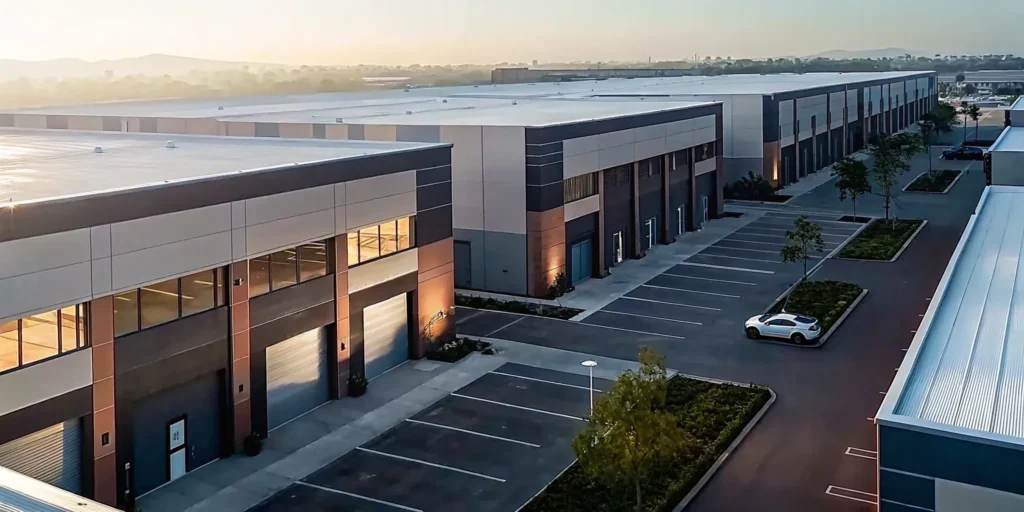
Industrial real estate has moved from a specialist allocation to a core consideration for investors seeking tangible assets, durable tenant demand, and income potential. Within the sector, small-bay flex properties stand apart because they serve a diversified base of local and regional businesses rather than relying on a single large occupier. A disciplined industrial real estate investment thesis therefore begins with the market, tenant mix, lease structure, and operating plan, not simply the building.
Explore QC Capital’s opportunities for accredited investors and review how a vertically integrated operator evaluates essential real assets.
An industrial real estate investment is an ownership interest in property used to manufacture, store, service, or distribute goods. The category includes distribution centers, manufacturing facilities, and flex industrial buildings. Investors typically evaluate these assets for income potential, diversification, and long-term value, while weighing vacancy, tenant credit, financing, environmental, and liquidity risks.
What is an industrial real estate investment?
An industrial real estate investment provides exposure to the physical infrastructure businesses use to produce, store, maintain, and distribute goods. Demand is tied to commerce, supply chains, local services, and business formation. That economic role can make industrial property a useful complement to traditional stocks and bonds, but ownership remains illiquid and asset-specific.
The sector spans several distinct property types. Large distribution centers serve national logistics networks. Manufacturing facilities may require specialized power, clear heights, or equipment. Small-bay and flex industrial properties combine warehouse or service space with office, showroom, or light production areas. Each category has different tenant profiles, lease structures, capital requirements, and risks.
Why the category attracts investor attention
Industrial property can offer contractual rent, potential appreciation, and a tangible inflation-sensitive asset. Demand has also benefited from e-commerce, supply-chain resilience initiatives, and the need to locate inventory and services closer to customers. Clarion Partners reported that industrial represented approximately one-third of diversified real estate indices in early 2025, illustrating how the sector’s institutional role has expanded.
That growth does not eliminate underwriting discipline. New supply, higher financing costs, tenant failures, and obsolete buildings can impair performance. Sophisticated investors look beyond sector headlines to the local submarket, replacement cost, tenant economics, and the operator’s ability to manage the asset.
Three principal industrial property types
- Distribution and logistics: Large facilities designed to move and store goods efficiently, often with significant exposure to major tenants.
- Manufacturing: Specialized properties configured for production, with underwriting shaped by power, equipment, environmental history, and tenant-specific improvements.
- Flex and small-bay industrial: Adaptable units serving trades, logistics, light manufacturing, showroom, service, and office users.
Why flex industrial space stands apart
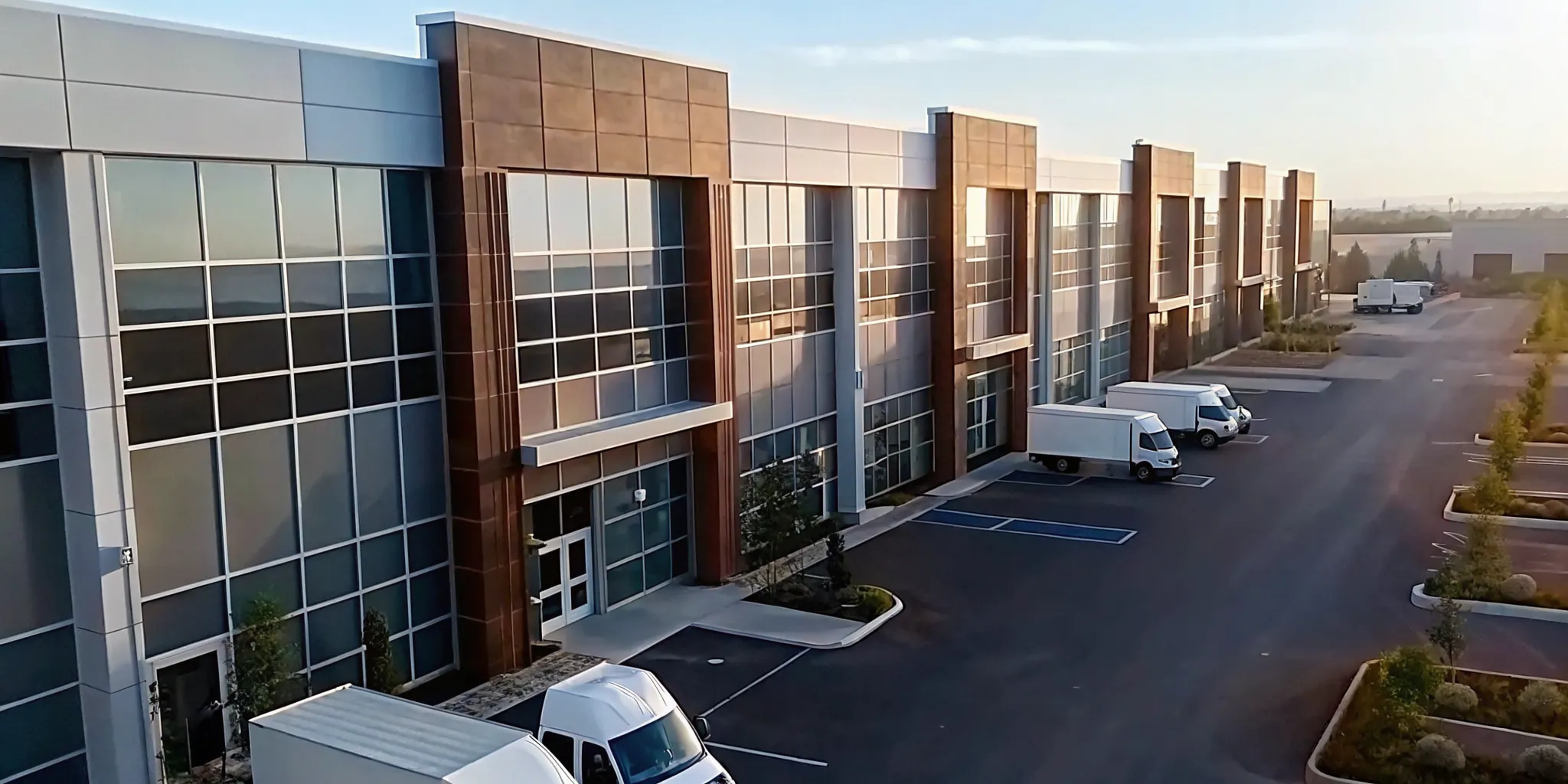
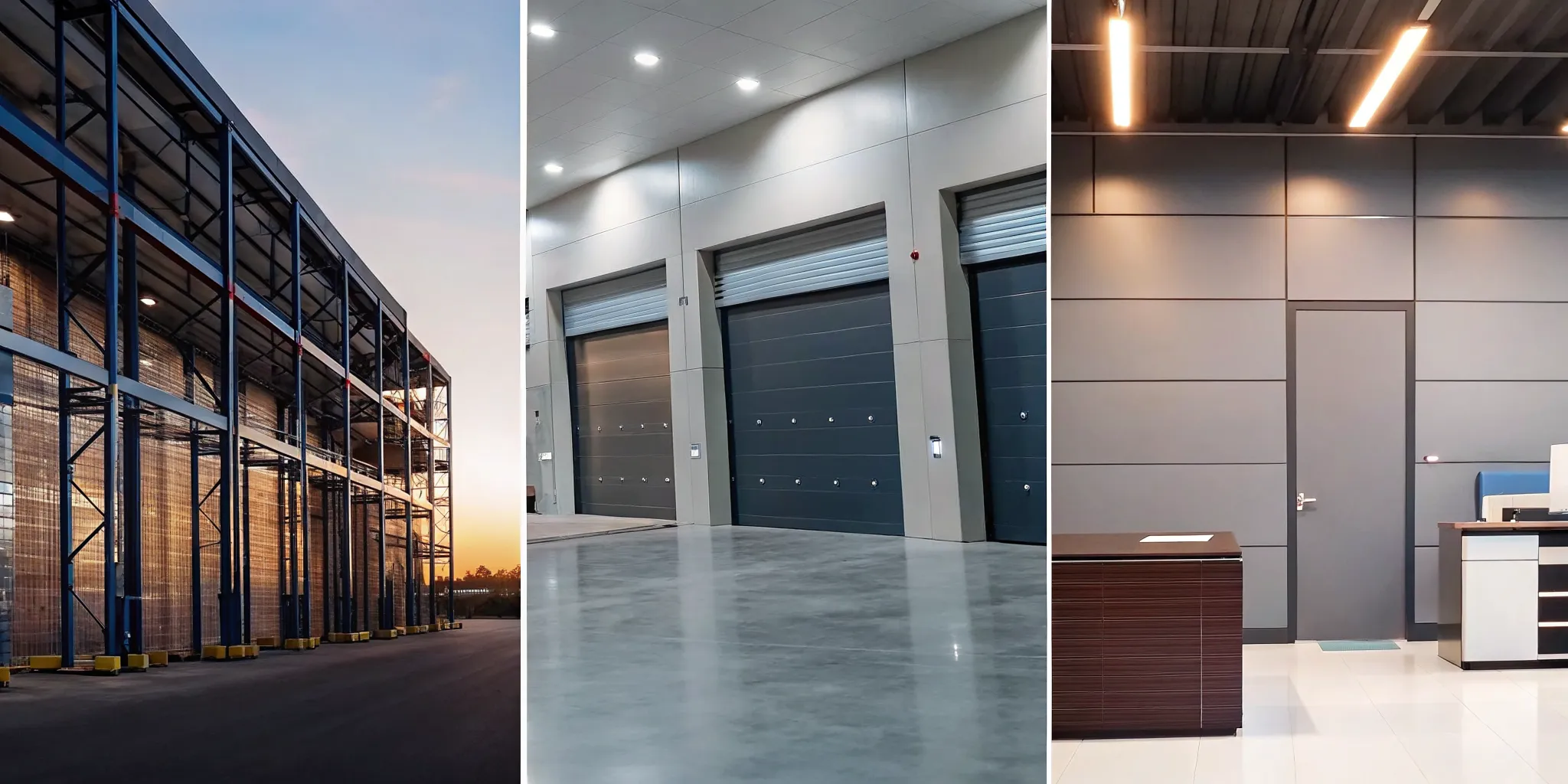
Flex industrial properties combine functional warehouse space with adaptable office, service, showroom, or light manufacturing areas. Their smaller units appeal to a broader range of businesses than a single-purpose warehouse. For investors, that diversity can reduce dependence on one tenant while creating opportunities for active asset management.
Diversified demand at the local level
Typical flex tenants include HVAC contractors, electrical firms, logistics providers, specialty distributors, light manufacturers, and professional service businesses that need both workspace and storage. These companies often depend on proximity to local customers, employees, and transportation routes. Once a tenant has configured a unit for its operations, relocation can be disruptive, which may support retention when the property is well managed.
Multi-tenant layouts also change the risk profile. A vacancy in one small unit affects only part of a property’s rent roll, unlike a single-tenant building where one departure can eliminate all income. The tradeoff is operational intensity. Leasing, renewals, collections, maintenance, and tenant improvements must be managed across more relationships.
Constrained supply can matter
Small-bay industrial space is often difficult to replace in infill locations. Land values and construction economics may encourage developers to build larger projects, while zoning can restrict new industrial development near growing communities. In submarkets with healthy business formation and limited competing supply, functional flex assets may occupy a defensible position.
Investors should still validate the thesis market by market. Strong light industrial markets require more than population growth. They also need an appropriate tenant base, transportation access, achievable rents, and a supply pipeline that does not undermine occupancy.
What drives demand for flex industrial space?
Demand for flex industrial space is supported by local services, inventory needs, light production, and last-mile logistics. The strongest properties are positioned where businesses can reach customers and employees efficiently. Durable demand is therefore rooted in the economic function of the location, not a single national trend.
Local services and business formation
Trade contractors and service companies need secure areas for vehicles, tools, inventory, and administrative work. A flex unit can consolidate those requirements into one location. As a market adds households and businesses, demand for these essential services may expand with it.
Distribution and supply-chain resilience
Businesses increasingly value inventory positioned closer to customers. Small-bay properties can support regional distribution, parts storage, and last-mile operations without the footprint of a major logistics center. However, investors should distinguish durable operating demand from short-term leasing surges and verify whether rents remain affordable for target tenants.
Adaptable buildings
Flexible layouts can accommodate a wider range of users over time, but adaptability is not automatic. Clear height, loading access, parking, power, unit depth, and office buildout all affect reletting prospects. A building that works for several tenant categories may retain value better than one configured for a narrow use.
Review QC Capital’s Flex Space Fund to learn how its strategy approaches diversified tenants, NNN leases, and institutional-grade flex industrial properties.
Who leases small-bay industrial properties?
Small-bay industrial tenants are typically local and regional businesses whose operations require more functionality than conventional office or retail space can provide. A diversified rent roll may include trades, specialty distribution, light manufacturing, logistics, showroom users, and business services.
Tenant diversity can help moderate concentration risk, but it also makes tenant-level underwriting essential. Investors should examine credit quality, lease maturity, renewal probability, security deposits, tenant improvements, and how easily a unit can be re-leased. A full building is not necessarily a low-risk building if leases expire together or rents exceed market levels.
How tenant mix affects underwriting
A balanced tenant roster reduces exposure to one company or industry. It may also create more frequent opportunities to renew leases at current market rents. Conversely, many small tenants require disciplined systems for leasing and property management. Operator capability is therefore a material part of the investment case.
QC Capital’s flex industrial portfolio strategy emphasizes diversified tenant demand and hands-on operations. Accredited investors evaluating any fund should review the sponsor’s acquisition criteria, operating experience, reporting, fee structure, and risk controls.
How industrial lease structures shape cash flow
Lease structure determines how property expenses are allocated between owner and tenant. That allocation directly affects income predictability, exposure to rising costs, and management requirements. Investors should review the actual lease language rather than relying on labels alone.
| Lease Type | Typical Owner Responsibility | Typical Tenant Responsibility | Investor Consideration |
|---|---|---|---|
| Gross | Taxes, insurance, maintenance, and operating costs | Base rent | Greater exposure to expense inflation |
| Modified gross | Negotiated portion of structural and common costs | Rent plus specified operating costs | Requires close review of recoveries |
| Triple net (NNN) | Often limited structural obligations | Rent, taxes, insurance, and maintenance | More predictable expenses, subject to tenant credit and lease terms |
Why NNN leases appeal to investors
Triple net leases generally shift property taxes, insurance, and maintenance costs to tenants. That structure can make owner expenses more predictable and is central to QC Capital’s flex-space positioning. It does not make cash flow guaranteed or management unnecessary. Owners must still monitor tenant credit, lease compliance, capital items, vacancy, and the quality of expense reimbursements.
Lease rollover and mark-to-market potential
Shorter leases can create opportunities to reset rents, but they also increase rollover exposure. Longer leases provide visibility while potentially limiting near-term rent growth. A sound analysis models expirations, downtime, concessions, commissions, and tenant improvements under conservative assumptions.
What risks should industrial investors consider?
Industrial real estate investment involves market, physical, financial, operational, and liquidity risks. The most defensible opportunities are those where risks are identified before acquisition and addressed through pricing, due diligence, lease structure, reserves, and active management.
Supply, vacancy, and tenant credit
New construction can pressure occupancy and rents, particularly in markets where supply arrives faster than tenant demand. Tenant concentration can magnify the effect of a default. Investors should analyze competing availability, lease expirations, market rents, tenant financial strength, and the cost and time required to re-lease space.
Physical and environmental diligence
Industrial properties may have deferred maintenance, roof or pavement needs, insufficient power, obsolete loading configurations, or environmental concerns tied to prior uses. Professional inspections, environmental assessments, title review, and capital planning are fundamental. A low acquisition price can be misleading if substantial remediation or modernization is required.
Financing and liquidity
Debt can improve equity efficiency but also increases sensitivity to interest rates, refinancing conditions, and valuation changes. Real estate is illiquid, and a sale may take months or longer. Investors should understand fund terms, leverage limits, distribution policies, reserves, and exit assumptions before committing capital.
How to evaluate an industrial real estate investment
A disciplined evaluation connects market evidence, property functionality, lease economics, financing, and sponsor capability. Investors should test the downside as carefully as the upside and avoid treating projected returns as assured outcomes.
- Define the demand thesis. Identify the tenants the property serves and verify local business, population, transportation, and supply trends.
- Review the physical asset. Assess location, loading, parking, power, clear height, unit configuration, condition, and environmental history.
- Analyze the rent roll. Examine tenant credit, concentration, lease expirations, market rents, recoveries, and renewal assumptions.
- Stress-test the business plan. Model vacancy, slower leasing, higher expenses, capital needs, interest rates, and conservative exit pricing.
- Evaluate the operator. Review sourcing, underwriting, asset management, reporting, alignment, fees, and relevant experience.
For passive investors, a fund can provide access to a diversified portfolio and a professional operating team. It also introduces sponsor, structure, and fund-level risks. QC Capital is a vertically integrated private equity firm focused on essential real assets, including flex industrial properties. Its approach emphasizes disciplined underwriting, diversified tenants, NNN leases, and hands-on operations.
Frequently asked questions
Is industrial real estate a good investment?
Industrial real estate may support durable income and portfolio diversification when the property, market, tenant credit, lease terms, and capital structure are sound. Results are not guaranteed. Investors should assess the opportunity’s specific risks, economics, and fit with their objectives.
What is flex industrial real estate?
Flex industrial real estate combines warehouse, service, showroom, light manufacturing, or office functions within adaptable small-bay units. The format can serve a broad tenant base and may reduce reliance on a single occupier.
How do NNN leases affect industrial investment cash flow?
Under a triple net lease, tenants generally pay property taxes, insurance, and maintenance in addition to rent. This may make operating expenses more predictable for owners, although tenant credit and the precise lease language remain important.
What risks should investors evaluate before investing in industrial real estate?
Investors should assess local supply, tenant concentration, lease rollover, environmental conditions, building functionality, financing, capital expenditures, sponsor experience, and liquidity. Each factor can materially affect income and long-term value.
Consider flex industrial within a diversified real asset strategy
Flex industrial properties can offer exposure to essential local businesses, diversified tenancy, and adaptable buildings. Their potential depends on careful selection and active management. For accredited investors, the next step is to review the strategy, risks, terms, and operator before deciding whether the opportunity fits a broader portfolio.
Contact QC Capital to discuss its flex industrial strategy and request information about current opportunities for accredited investors.