

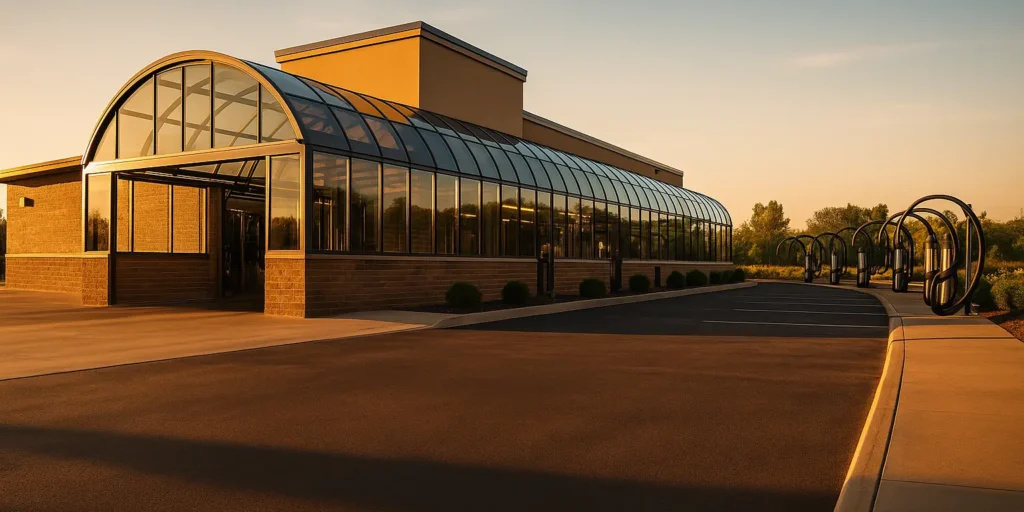
Before you recommend a car wash fund to a client, the operator should be able to answer 20 specific questions about site selection, membership economics, labor, capital expenditure, the fund’s structure, and its exit plan. The answers separate a sponsor that runs washes from one that merely owns them, and they give you a defensible file if a client or examiner later asks why the investment was suitable.
Why Car Wash Funds Need Their Own Due Diligence List
A car wash fund is an operating business wrapped in real estate, so the standard private real estate checklist misses most of what drives returns. A multifamily or net lease fund lives or dies on rent, occupancy, and cap rates. An express car wash lives or dies on car counts, membership retention, labor cost per car, and equipment uptime. The land and building matter, but they matter the way a restaurant’s lease matters: as a cost of doing business rather than the source of value.
The asset is a subscription business on real estate
Most express car wash revenue now comes from monthly unlimited wash memberships rather than single retail washes. That shifts the analysis toward churn, price elasticity, and the cost of acquiring a member. A site with 3,000 active members at $25 per month generates roughly $900,000 in recurring annual revenue before retail washes, and the durability of that revenue depends on how many members cancel each month. You are underwriting a recurring-revenue operator, and the questions should reflect that.
The sector has already been through a cycle
Car wash valuations peaked around 2022 when private equity and net lease buyers competed for sites, then compressed through 2024 as interest rates rose, new supply crowded some corridors, and at least one national chain went through a Chapter 11 process. An advisor evaluating a fund in 2026 is looking at a sector that has been tested. That is useful. It means you can ask how the operator performed through the trough instead of accepting a “recession resistant” slogan.
The advisor carries the suitability determination
If you are a registered investment advisor, your fiduciary duty under the Investment Advisers Act applies to the recommendation whether or not the sponsor pays you anything. If you are a broker-dealer representative, Regulation Best Interest applies. Either way, you need a written record of what you asked, what the operator answered, and why the investment fit the client. The 20 questions below are designed to produce that record.
Questions 1 to 5: Sites and Markets
The first five questions establish whether the operator can pick and build sites that will generate car counts, because no amount of marketing fixes a bad corner.
1. How do you select a site, and what is the minimum traffic count you will accept?
A credible operator has a written site model with traffic counts, ingress and egress requirements, household density within a defined drive time, median income bands, and a competitive radius. Ask for the numbers. Daily traffic counts in the 20,000 to 40,000 range on the primary road are typical for express sites, and the operator should be able to explain why its threshold sits where it does.
2. How many competing washes operate within three miles of each site, and how many are under construction?
Oversupply is the primary risk in this sector. Some Sun Belt corridors added three or four new express tunnels within a few miles of each other between 2021 and 2024. Ask for a competitive map for every site in the fund and for any site under contract. An operator who has not mapped permit filings and construction starts within its trade areas is not watching the risk that matters most.
3. Are you acquiring existing washes, building new ones, or both, and what is the mix?
Acquisitions of under-managed existing sites produce revenue from day one and let the operator apply its membership playbook to a known car count. Ground-up development carries entitlement, construction, and ramp risk but can produce higher returns if the corner is right. A fund that mixes the two should tell you the target mix and how it prices each. QC Capital’s stated car care strategy, for reference, targets under-managed existing sites and small portfolios with high-volume potential rather than ground-up development.
4. Who owns the real estate, and is any of it subject to a sale-leaseback?
Some operators sell the land and building to a net lease REIT and lease it back, which returns capital quickly but leaves the operating company paying rent forever. Ask whether the fund owns the fee-simple real estate, leases it, or intends to execute sale-leasebacks. Each answer changes the risk profile and the exit value. Fee ownership gives the fund two ways to realize value: the operating business and the property.
5. What is your geographic concentration, and what happens if one metro underperforms?
A fund with eight sites in one metro is a bet on that metro’s employment, weather, and competitive dynamics. Regional concentration can be a strength when it lets the operator share labor, management, and marketing across sites. Ask how the operator thinks about it and what the fund documents permit.
Questions 6 to 10: Membership and Unit Economics
These five questions test whether the operator actually understands the subscription business it is running.
6. What percentage of revenue comes from memberships, and what is the monthly churn rate?
Mature express sites often generate 60% to 80% of revenue from memberships. Monthly churn in the mid single digits is common; anything materially higher deserves an explanation. An operator that cannot quote churn by site is not managing the business at the level the returns require.
7. What does it cost to acquire a member, and how long does the average member stay?
Ask for customer acquisition cost and average membership tenure by site. Together they tell you the lifetime value of a member and whether the marketing budget is producing durable revenue or churning through promotional sign-ups.
8. What is your average revenue per car, and how has it changed over the last three years?
Average revenue per car, blending members and retail customers, is the sector’s key pricing metric. Rising revenue per car with stable car counts suggests pricing power. Falling revenue per car with rising counts may mean the operator is discounting to fill the tunnel.
9. What are labor costs per car and per site, and how are they trending?
Labor is the largest controllable operating expense. An express tunnel typically runs with a small crew per shift, and the operator should know its labor cost per car and its turnover rate. Ask how it staffs, trains, and retains site managers, because manager quality is the single largest driver of site-level performance.
10. What technology runs the sites, and what data do you get from it?
License plate recognition, point-of-sale integration, and customer relationship management systems let an operator track member behavior, automate renewals, and target lapsed members. Ask what systems are installed, whether they are consistent across sites, and what reports the fund’s investors will see.
Questions 11 to 14: Capital Expenditure and Operations
11. What is the equipment replacement schedule, and how is it funded?
Tunnel equipment, conveyors, dryers, and water reclamation systems wear out. A realistic model reserves for replacement rather than assuming equipment lasts the life of the fund. Ask for the capital expenditure reserve per site per year and how it compares with the operator’s actual historical spend.
12. What are your water, chemical, and utility costs, and do any sites face water restrictions?
Water reclamation reduces cost and regulatory exposure. Sites in drought-prone jurisdictions may face restrictions that affect hours or pricing. The operator should know its cost per car for water and chemicals and should be able to name the jurisdictions where water policy is a risk.
13. How much of the fund’s return depends on operational improvement versus market appreciation?
An operator-led thesis should be able to show, site by site, the gap between current performance and the target after the operator’s playbook is applied: membership penetration, pricing, labor, and marketing. If most of the projected return comes from exit multiple expansion rather than operating improvement, the fund is a market bet dressed as an operating strategy.
14. Who runs the sites day to day, and what happens if that person leaves?
Ask for the names and tenure of the operations leadership, the regional managers, and the site managers. Ask about succession. Key person risk in a car wash fund is not only the fund’s general partner; it is the vice president of operations who knows how to run tunnels.
Comparing Operator Answers: What Strong and Weak Responses Look Like
The table below gives you a reference point for scoring the answers you receive. It is not a scoring formula. It is a way to recognize when an operator is managing the business at the level the projected returns require.
| Diligence area | Strong answer | Weak answer |
|---|---|---|
| Site selection | Written model with traffic count thresholds, density and income bands, and a competitive map for every site | “We know a good corner when we see one” |
| Membership churn | Monthly churn quoted by site, with trend and the actions taken where churn rose | Churn not tracked or quoted only as a portfolio average |
| Labor | Labor cost per car by site, manager turnover rate, and a documented training program | Labor described as “lean” without numbers |
| Capital expenditure | Reserve per site per year with historical spend to compare against | Equipment assumed to last the life of the fund |
| Return sources | Site-level bridge from current to target performance driven by operating changes | Most of the return attributed to exit multiple expansion |
| Sponsor alignment | GP commitment stated as a percentage or dollar range, fees disclosed in writing | “Significant” commitment with no number; fees explained verbally |
| Track record | Deal-level outcomes including any losses, with what changed afterward | Portfolio-level projections only, no realized results |
Questions 15 to 20: Fund Structure, Alignment, and Exit
The final six questions move from the operating business to the vehicle your client would actually own.
15. What is the fund structure, and what exemption is the offering relying on?
Most car wash funds are Regulation D offerings, typically under Rule 506(b) or 506(c). A 506(c) offering can be marketed publicly but must verify that every investor is accredited, which affects your subscription workflow. Ask for the private placement memorandum, the operating agreement, and the subscription documents, and confirm whether the fund is a single-asset vehicle, a multi-asset closed-end fund, or an evergreen structure.
16. What is the sponsor’s own capital commitment, as a number?
General partner co-investment is the most direct alignment signal available. Ask for the commitment as a percentage of total equity or a dollar range, and ask whether it is funded in cash or credited through fees. “Significant” is not an answer you can put in a suitability file.
17. What are all fees, and how does the waterfall work?
Ask for acquisition fees, asset management fees, property or operations management fees, disposition fees, and any affiliate arrangements such as an affiliated management company running the sites. Then ask for the distribution waterfall: preferred return, catch-up, and carried interest split. Model a base case and a downside case to see how the fees behave when the operating plan slips.
18. What is the target hold period, and what are the realistic exit buyers?
Express car wash portfolios have historically sold to national consolidators, private equity platforms, and net lease REITs for the real estate. Ask which buyers the operator expects at exit and what a portfolio of the fund’s size and quality has traded for recently. Ask what happens if no buyer appears at the target price: does the fund extend, refinance, or sell assets individually?
19. Where are fund assets custodied, and can the position be held at my client’s custodian?
For an advisor, this question determines whether the position can sit alongside the client’s other holdings, appear on consolidated statements, and support fee billing. Ask whether the sponsor has arranged custody at a major custodian, what the subscription and reporting workflow looks like, and when K-1s have historically been delivered.
20. What has gone wrong in a previous deal, and what did you change?
Every operator with a track record has a site or a deal that underperformed. An operator who tells you about it, explains the cause, and describes the change in underwriting or operations has shown you something more useful than a clean highlight reel. An operator who says nothing has ever gone wrong has either not been operating long enough or is not being candid.
How to Use the Answers in a Suitability File
The purpose of the list is a documented record. Ask the questions in writing, keep the written answers, and note where the operator declined to answer or answered vaguely.
Sort answers into three groups
Group the responses into facts you verified with documents, facts the operator asserted without support, and questions that went unanswered. Your recommendation should rest mainly on the first group. Unanswered questions about fees, GP commitment, or track record are usually disqualifying on their own.
Tie the answers to the client’s constraints
Illiquidity, the hold period, the accredited investor requirement, and the tax character of distributions each map to a client attribute: liquidity needs, time horizon, net worth or income, and tax situation. Write the mapping down. An operating asset fund with a multi-year hold does not fit a client who may need the capital within the hold period, regardless of how strong the operator is.
Size the allocation to the risk
A single-sector operating fund is a concentrated position. Many advisors cap any one private placement at a low single-digit percentage of a client’s investable assets and cap the total illiquid allocation at a level the client can hold through a downturn without forced selling elsewhere. Record the sizing rationale alongside the diligence answers.
The QC Capital approach to advisor due diligence
QC Capital sponsors express car wash and integrated car care investments in Southeast primary and secondary markets, acquiring under-managed sites and rebranding them under its AquaShine and Cruz Express Oil operating platforms. The sites run on license plate recognition and customer relationship management systems to manage membership growth and retention, and QC Capital states that it maintains a GP commitment in every acquisition. Offerings are conducted under Rule 506(c) for accredited investors, fund assets are custodied at Charles Schwab, and investors receive reporting and distributions through an InvestNext portal. Advisors who want written answers to the 20 questions above, along with offering documents, can request them directly from the QC Capital capital markets team.
Frequently Asked Questions
Are car wash funds suitable for high net worth clients?
They can be, for accredited clients with a multi-year horizon, no need for the capital during the hold, and an allocation to illiquid operating real assets that fits their overall plan. The suitability determination belongs to you as the advisor, and it should rest on the operator’s answers to the questions above rather than on sector enthusiasm.
What is the biggest risk in a car wash fund?
Oversupply in a trade area, followed by operator execution. A new competitor within a few miles can pull car counts and members from an established site, and no operator can fully control that. Execution risk shows up as labor turnover, equipment downtime, and membership churn.
How are car wash fund distributions taxed?
Most car wash funds are partnerships that issue a Schedule K-1. Depreciation on equipment and qualifying structures can offset a substantial portion of early distributions, and losses are generally passive for investors who do not materially participate. Depreciation is recaptured at sale. Clients should review the tax treatment with their CPA before investing.
How long is the typical hold period?
Operating asset funds commonly target hold periods in the range of 3 to 7 years, with the fund documents usually permitting extensions. Confirm the target and the extension provisions in the operating agreement rather than relying on a pitch deck.
Can a car wash fund position be held at Schwab or another custodian?
Only if the sponsor has arranged custody and the fund meets the custodian’s acceptance criteria. Ask the sponsor directly and confirm with the custodian’s alternative investment desk before you subscribe on a client’s behalf.
If you would like written answers to these 20 questions for QC Capital’s car care offerings, along with the offering documents, you can reach the team through the QC Capital contact page.