
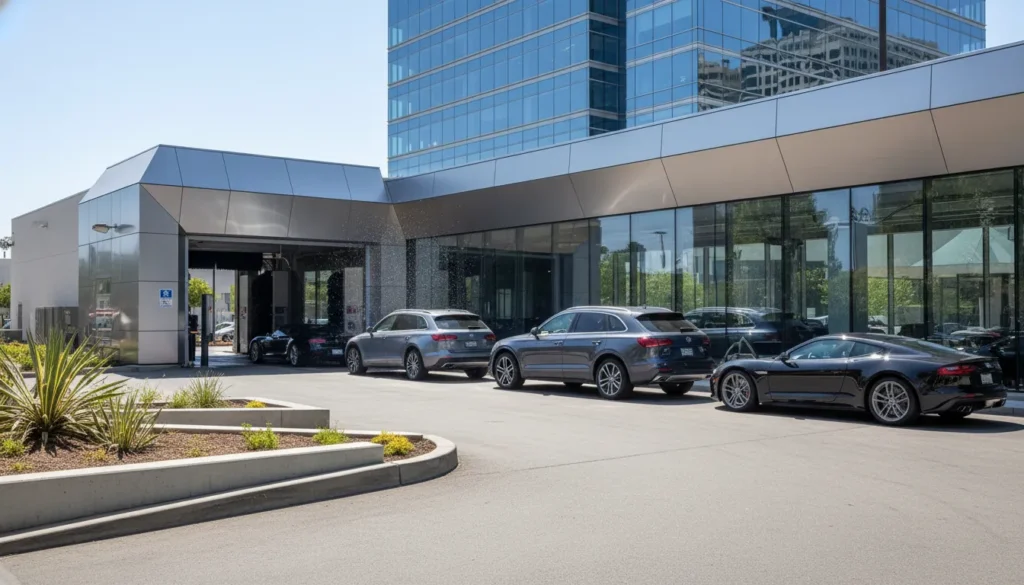
Investing in a car wash does not have to mean buying land, hiring attendants, repairing equipment, or managing customer memberships yourself. Accredited investors can access the car wash sector through professionally managed structures that pool capital, acquire operating assets, and handle the daily work through an experienced sponsor.
Interested in passive car wash investment opportunities? Contact QC Capital Group to learn whether current offerings fit your goals as an accredited investor.
Quick Answer: How Can You Invest in a Car Wash Without Operating It?
You can invest in a car wash without operating the business by participating as a passive investor in a private fund, syndication, or professionally managed real asset strategy. In these structures, the sponsor sources the opportunity, performs due diligence, arranges financing, oversees operations, manages reporting, and executes the business plan. Your role is to review the offering materials, confirm that you meet investor eligibility requirements, commit capital, and monitor performance through updates from the sponsor.
This approach is different from buying a car wash yourself. Direct ownership may give you more control, but it also brings responsibility for site selection, debt, staffing, maintenance, marketing, vendor management, customer experience, and exit planning. Passive investing shifts those operating responsibilities to a team that is already built to manage the asset.
Why Investors Look at Car Washes as an Alternative Asset
Modern express car washes are no longer simple roadside wash bays. Many operate as technology-enabled service businesses with automated tunnels, recurring membership programs, water reclamation systems, strong local branding, and valuable underlying real estate. For investors, that combination can make the asset class easier to understand than many alternatives while still offering exposure outside traditional public stocks and bonds.
Car washes may appeal to investors because they connect several investment themes:
- Tangible real assets: Investors can understand the physical property, equipment, location, and service being delivered.
- Recurring revenue potential: Subscription memberships can help stabilize cash flow when managed well.
- Operational value creation: Performance can improve through better pricing, marketing, staffing, technology, and customer experience.
- Real estate fundamentals: Location quality, traffic counts, access, zoning, and local demographics all matter.
- Portfolio diversification: Private operating real assets can behave differently than public market holdings.
Those strengths do not remove risk. Car wash investments still depend on local demand, competition, execution, financing terms, weather patterns, labor, maintenance, and exit conditions. The value of a passive structure is that an experienced sponsor is responsible for underwriting those variables before investor capital is committed.
Route 1: Invest Through a Private Car Wash Fund
A private car wash fund pools capital from qualified investors and uses that capital to acquire, develop, improve, or operate multiple car wash assets. This route can be attractive for investors who want exposure to the asset class but do not want to choose one location, negotiate one purchase, or build an operating team from scratch.
In a fund structure, the sponsor typically manages the full investment lifecycle. That may include sourcing sites, analyzing traffic and demographics, arranging financing, overseeing improvements, building the brand, managing operations, reporting to investors, and pursuing a refinance or sale when appropriate.
For QC Capital, car wash investing fits within a broader focus on essential real assets. The firm acquires both real estate and operating businesses in the express car wash sector and applies hands-on operational oversight through its platform. Investors evaluating this route can review the car wash investment opportunities guide for additional context on market drivers and investment models.
A fund can also reduce single-asset concentration if it owns or plans to own multiple properties. Instead of depending entirely on one wash, investors may receive exposure to a portfolio strategy. The tradeoff is that investors rely heavily on the sponsor’s underwriting, reporting, and execution discipline.
Route 2: Invest as a Limited Partner in a Syndication
A syndication is a deal-specific partnership. The general partner, often called the sponsor, finds and manages the opportunity. Limited partners contribute capital and participate economically according to the offering terms. The limited partner role is passive, meaning investors do not run the wash, manage employees, or negotiate daily vendor issues.
This route can work for investors who want to evaluate a specific asset or small group of assets. The investor can review the business plan, local market data, projected budget, financing assumptions, risk disclosures, and exit strategy before deciding whether to participate.
QC Capital has also published a detailed explanation of how car wash syndication works. This article takes the next step by helping investors compare the broader routes, questions, and due diligence items involved before they commit capital.
Route 3: Invest in a Broader Private Equity Real Asset Strategy
Some investors prefer exposure to car washes as part of a broader private equity real asset approach. In this model, the sponsor may focus on essential assets such as car washes, flex industrial space, or other operating real estate opportunities. The goal is not simply to own property. It is to combine institutional underwriting with operational execution.
This route may be useful for investors who want to diversify across multiple essential real asset categories while still working with a manager that emphasizes tangible assets, cash flow, and professional reporting. QC Capital’s private equity real estate strategy explains how the firm evaluates recession-resistant assets, active operations, and long-term value creation.
As with any private offering, investors should read the private placement memorandum, review risk factors, understand fees and distributions, and speak with their own legal, tax, and financial advisors before making a decision.
What Do You Need Before You Invest?
Before you invest in a passive car wash opportunity, you need to confirm eligibility, define your goals, understand the minimum investment, and review the offering documents carefully. For many private car wash funds or syndications, participation is limited to accredited investors under SEC rules.
Accredited investor status generally depends on income, net worth, professional credentials, or entity qualifications. If you are unsure where you stand, QC Capital’s article on who qualifies as an accredited investor can help you understand the category at a high level.
You should also clarify your own objectives before reviewing a deal:
- Are you looking for potential income, long-term appreciation, tax efficiency, or diversification?
- How much illiquidity can you tolerate?
- Do you prefer a fund with multiple assets or a specific single-asset syndication?
- How important are monthly or quarterly distributions to your plan?
- Do you already have exposure to real estate, private equity, or operating businesses?
Private investments are not the same as publicly traded securities. Capital may be locked up for several years, distributions can vary, and exit timing is not guaranteed. The right structure should match your financial position, risk tolerance, and time horizon.
Typical Steps to Invest in a Car Wash Passively
Although every offering is different, most passive car wash investments follow a similar process.
- Identify a qualified sponsor: Look for a team with relevant acquisition, financing, construction, asset management, and operating experience.
- Review the investment thesis: Understand why the sponsor believes the car wash sector, the target market, and the specific assets are attractive.
- Confirm investor eligibility: Determine whether the offering is limited to accredited investors and what verification steps are required.
- Study the offering materials: Read the PPM, subscription documents, risk factors, projected financials, fee disclosures, and business plan.
- Ask due diligence questions: Focus on assumptions, downside scenarios, debt terms, operator experience, reporting cadence, and exit strategy.
- Commit capital if appropriate: Complete subscription documents and fund your investment according to the sponsor’s instructions.
- Monitor updates: Review investor reports, distribution notices, tax documents, and major asset updates during the hold period.
Want to discuss the passive route instead of operating a car wash yourself? Schedule an investor conversation with QC Capital Group.
Due Diligence Questions to Ask the Sponsor
The sponsor matters as much as the asset. A strong market can still disappoint if the operator overpays, uses aggressive debt, underestimates repairs, or fails to execute the membership strategy. Before investing, ask questions that reveal how the sponsor thinks and how they protect investor capital.
| Due Diligence Area | Questions to Ask |
|---|---|
| Market selection | Why this market? What do traffic counts, household income, competition, and population growth show? |
| Site quality | How visible and accessible is the site? Are ingress, egress, zoning, and nearby retail traffic favorable? |
| Operations | Who manages the wash? What systems are in place for staffing, maintenance, memberships, pricing, and customer experience? |
| Capital plan | What improvements are planned? How much contingency is built into the budget? |
| Debt structure | What are the loan terms, rate assumptions, maturities, covenants, and refinance risks? |
| Investor economics | How are preferred returns, profit splits, fees, and distributions structured? |
| Risk management | What downside scenarios were modeled? What happens if revenue grows slower than projected? |
| Exit strategy | Is the plan to refinance, sell, recapitalize, or hold? What comparable transactions support that plan? |
Good sponsors should be able to discuss both upside and risk. Be cautious if the conversation focuses only on projected returns without explaining assumptions, downside cases, liquidity limits, and operational challenges.
What Minimum Investment Should You Expect?
Minimum investment amounts vary by sponsor, fund, and share class. In QC Capital’s car wash materials, investment classes have included a lower Class A minimum and a higher Class B minimum with different economics. The right amount depends on the current offering documents, investor eligibility, and your overall portfolio allocation.
Investors should avoid making a decision based only on the minimum. A $50,000 or $100,000 commitment can still be significant if it creates too much concentration or limits liquidity. Instead, compare the minimum to your net worth, income, existing alternatives exposure, and expected cash needs during the hold period.
If you are reviewing private equity options more broadly, the guide to investing in private equity for high-net-worth investors can help frame the decision.
How Long Does a Passive Car Wash Investment Take?
Passive car wash investments usually require a multi-year horizon. The sponsor needs time to acquire or develop the asset, improve operations, grow recurring revenue, stabilize performance, manage financing, and pursue an exit or refinance when market conditions support it.
A simplified timeline may look like this:
- Offering review: Investors review materials, ask questions, and complete accreditation or subscription steps.
- Acquisition or development: The sponsor closes on the property, transitions operations, or begins the improvement plan.
- Stabilization: The operating team focuses on memberships, pricing, staffing, maintenance, branding, and customer flow.
- Hold period: Investors receive updates and potential distributions while the sponsor executes the business plan.
- Exit or refinance: The sponsor evaluates market conditions and pursues a liquidity event if aligned with the strategy.
Private investment timelines are estimates, not guarantees. Market conditions, financing availability, operating results, and buyer demand can all affect the final outcome.
Risks to Understand Before Investing
Car wash investing can be compelling, but it is not risk-free. Passive investors should understand the risks before they commit capital.
- Execution risk: The sponsor may not achieve projected membership growth, revenue, margins, or exit pricing.
- Competition risk: New washes or aggressive local competitors can affect pricing and volume.
- Debt risk: Interest rates, loan maturities, covenants, and refinancing conditions can influence returns.
- Construction and maintenance risk: Equipment, site improvements, and repairs can cost more than expected.
- Liquidity risk: Private investments are typically illiquid during the hold period.
- Weather and demand risk: Local weather patterns, consumer behavior, and economic conditions can affect wash volume.
- Regulatory and environmental risk: Water usage, drainage, permitting, and local rules can affect operations.
Risk disclosure should be part of the offering documents. If you are not comfortable with the risks, timeline, or liquidity profile, the opportunity may not fit your portfolio.
How QC Capital Approaches Passive Car Wash Investing
QC Capital focuses on essential real assets that are tangible, understandable, and operationally driven. In car wash investing, that means the firm is not relying only on buying an asset and waiting. The strategy emphasizes disciplined underwriting, direct operational involvement, brand development, and clear communication with investors.
The firm’s broader platform is built around acquiring and improving real assets such as express car washes and flex industrial space. That vertical approach is important because car washes are operating businesses as well as real estate. Value is often created through daily execution, not just ownership.
For accredited investors, the appeal is access. Instead of becoming a car wash operator, you can evaluate whether a professionally managed car wash opportunity belongs in your private investment allocation.
To learn more about current opportunities for accredited investors, connect with QC Capital Group.
FAQ: Investing in a Car Wash Without Operating It
Can I invest in a car wash without owning the business myself?
Yes. Passive structures such as private funds and syndications allow investors to participate economically while the sponsor manages acquisition, financing, operations, reporting, and exit planning.
Do I need to be an accredited investor to invest in a car wash fund?
Many private car wash funds and syndications are limited to accredited investors. Eligibility depends on the specific offering and SEC rules. Review the offering documents and speak with your advisors before investing.
Is passive car wash investing the same as buying a car wash?
No. Buying a car wash directly makes you responsible for ownership and operations. Passive investing gives you exposure through a sponsor-managed structure, but it also means you have less direct control.
How do passive investors make money from car wash investments?
Potential returns may come from operating cash flow, distributions, refinancing, appreciation, or a sale. The exact economics depend on the fund or syndication terms, asset performance, fees, and exit outcome.
What should I review before investing?
Review the sponsor’s experience, market thesis, site fundamentals, debt terms, projected financials, fee structure, risk factors, reporting process, and exit strategy. You should also consult your legal, tax, and financial advisors.